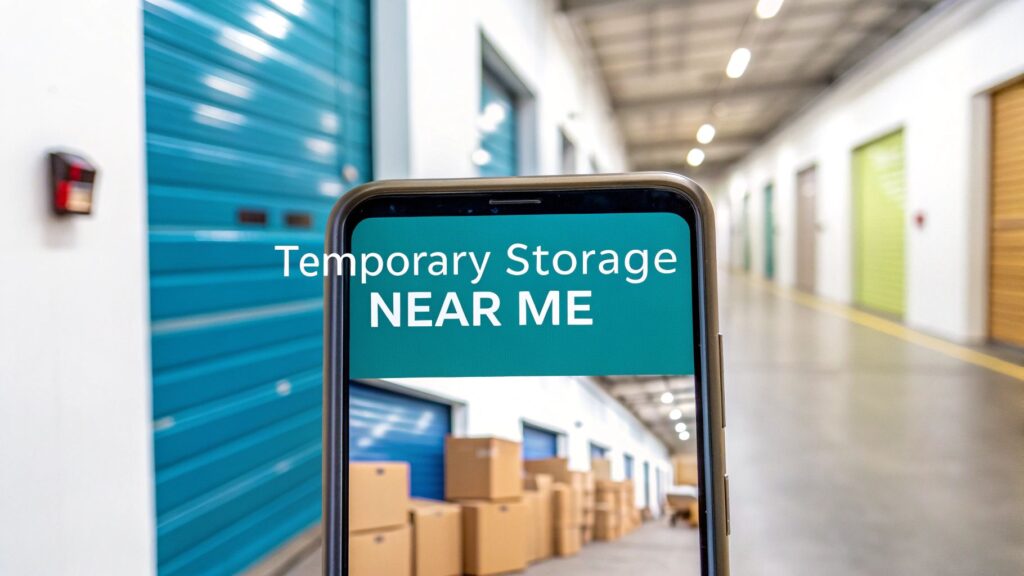
Life has a funny way of throwing curveballs, whether it's a planned project or a sudden change of plans. When you find yourself searching for "temporary storage near me," what you're really after is a bit of breathing room. A storage unit is more than just four walls and a door; it’s a flexible solution that brings a sense of calm and organisation right when you need it most.
Common Reasons You Might Need Storage Space
Life is full of moments that can leave you feeling squeezed for space. While moving house is the first thing that comes to mind, plenty of other situations can benefit from having a secure, accessible unit just around the corner. Think of it as a temporary extension of your home or office—it can make those big projects feel a whole lot more manageable.
Home Renovations and Decluttering
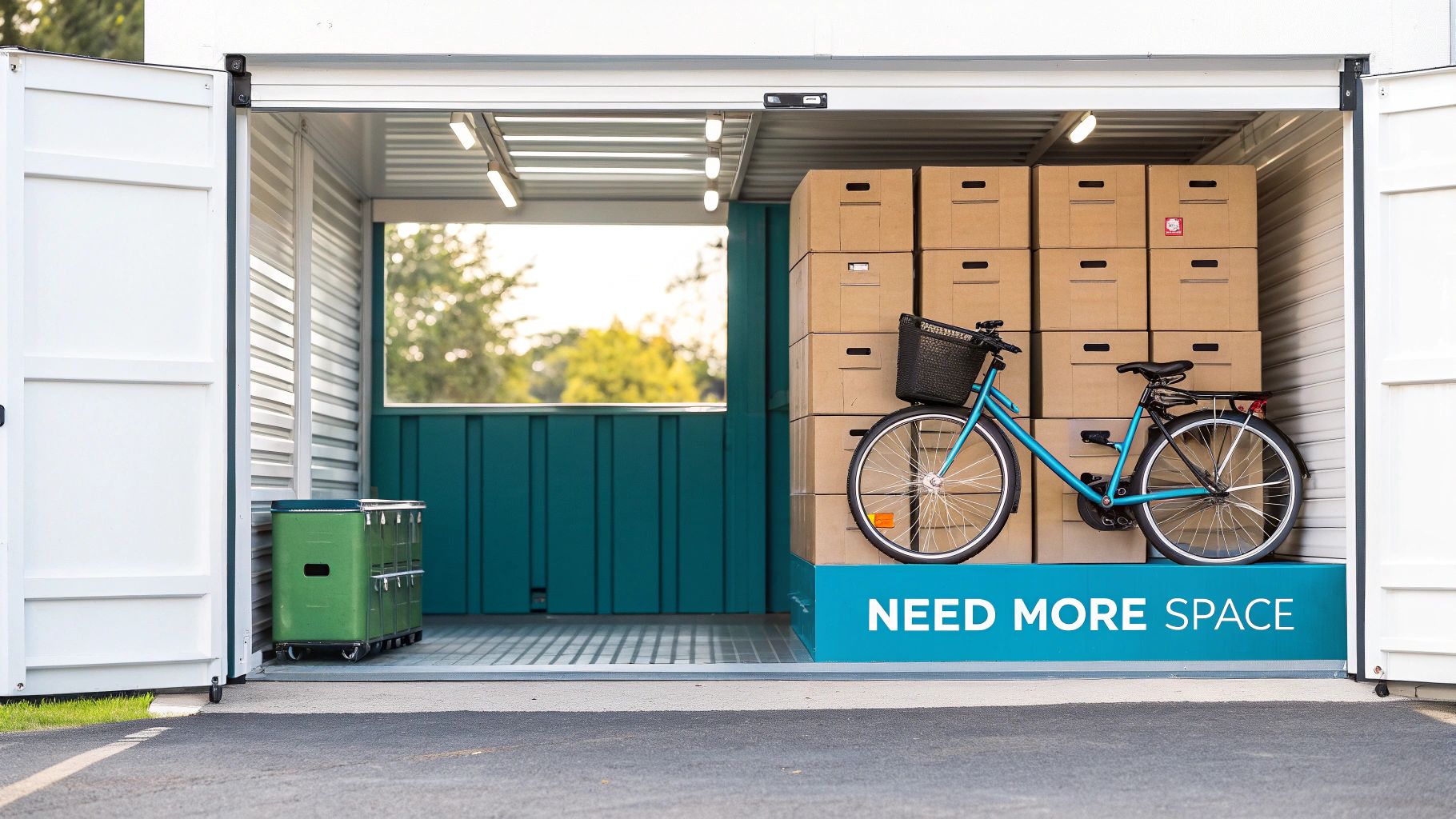
Embarking on a home renovation is often an exercise in organised chaos. A temporary storage unit acts as a safe haven for your furniture and belongings, keeping them well away from dust, paint, and potential damage.
It’s also a lifesaver when you're preparing a property for sale. Decluttering is key to making a great first impression. Staging your home effectively can seriously boost its appeal, and moving non-essential items into storage makes rooms feel larger, brighter, and more inviting to potential buyers.
Bridging Gaps During a Move
Let's be honest, house moves rarely line up perfectly. You might find yourself stuck with a delay between selling your old place and getting the keys to the new one. Short-term storage offers a secure bridge, holding onto your possessions until you're ready to move in. It’s a simple way to avoid the stress of last-minute scrambles and keep everything safe and sound.
Student and Business Needs
Of course, life’s transitions aren't just for homeowners. Plenty of other scenarios call for a flexible space solution:
- Student Storage: University students often need a spot to keep their things over the summer holidays, saving them the hassle of lugging everything back home. Our guide to summer storage for students has some great advice on this.
- Business Inventory: Small businesses, especially in e-commerce, can use a storage unit to manage seasonal stock or excess inventory without getting locked into an expensive commercial lease.
- Life Events: Downsizing, combining households, or sorting through an inheritance are all times when a bit of extra space can provide much-needed clarity. It gives you the time to make decisions without feeling overwhelmed by clutter.
How To Find The Best Local Storage Options
Kicking off a search for "temporary storage near me" can feel like you're staring at a mountain of options. But honestly, a few smart starting points will help you cut through the noise and find the right fit, fast. The trick is to think local from the get-go, so you're not wasting time on facilities that are just too far out of the way.
Start by getting specific with your online searches. Instead of something vague, try terms like ‘short term storage near [your postcode]’ or ‘[your town] self storage’. This simple tweak forces search engines to show you what's genuinely on your doorstep.
Visualise Your Options and Vet Them Online
Once you have a few names, it's time to map them out. Literally. Pull up an online map and see where each facility is located in relation to your home, your work, or wherever you'll be coming from. This quick step is brilliant for spotting which places are actually convenient and which would be a pain to get to.
Next, it's time for some real-world feedback. Head over to independent review sites like Google or Trustpilot and see what genuine customers are saying. You're looking for patterns here. Are people constantly mentioning how clean the place is or how helpful the staff are? Or are there recurring grumbles about surprise fees and access issues? These reviews are gold because they're unfiltered.
A storage facility's website is its digital storefront. If it’s professional, transparent, and easy to navigate, it’s a strong signal that the physical facility is managed to a similar high standard.
Scrutinise Their Website Before You Visit
A good website should tell you almost everything you need to create a solid shortlist. Before you even think about jumping in the car, have a good look through their site for these must-have details:
- Clear Pricing: You want to see upfront info on monthly rates and any special offers. If the prices are hidden, it's worth being a bit wary.
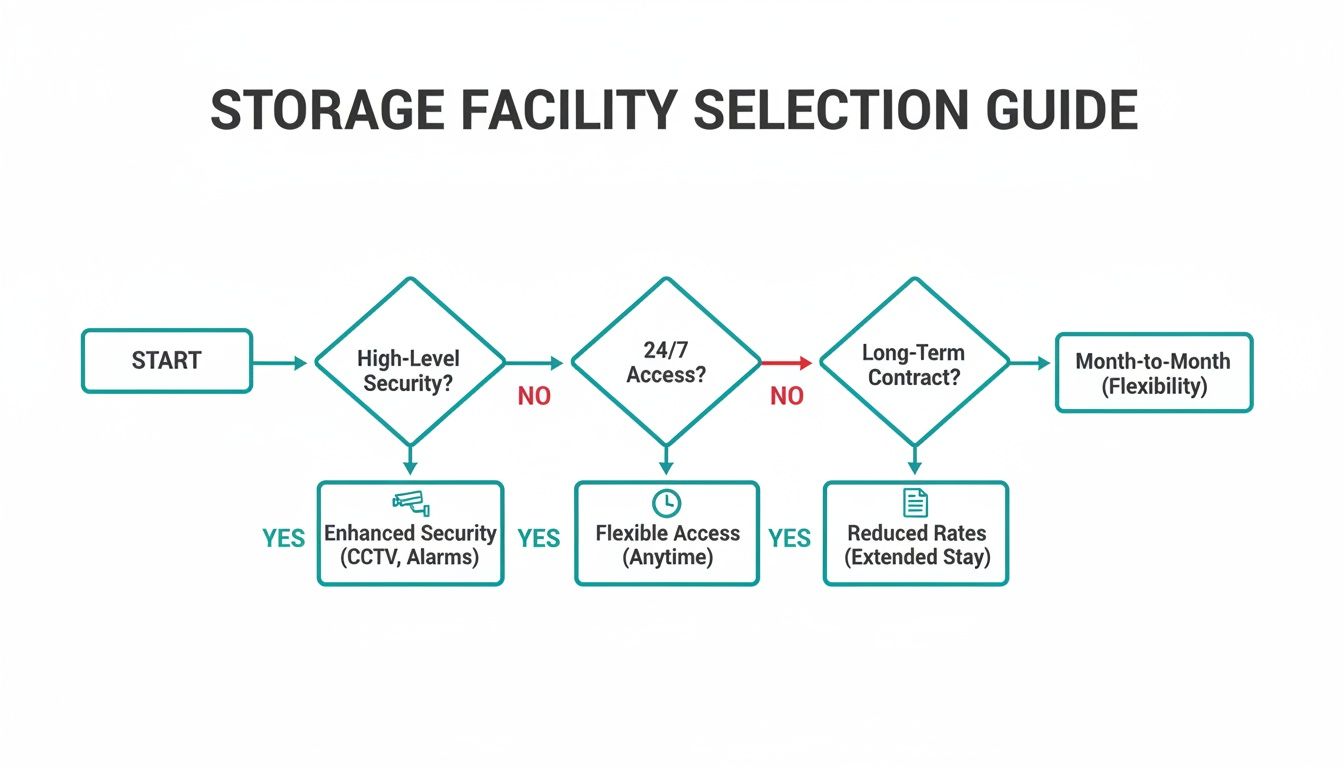
- Access Hours: Make sure their hours work for your schedule. Some places offer 24/7 access, which is a massive plus, while others have more set times.
- Professional Photos: Are the pictures clear and well-lit? Do they actually show the units and security features, or are they just generic stock photos? Real photos are a sign of transparency.
- Security Details: The website should be shouting about its security. Look for mentions of 24/7 CCTV, gated access, and individual unit alarms.
Putting in this bit of online legwork is so important. It helps you quickly weed out the unsuitable options and focus your energy on the top two or three contenders that are actually worth visiting. And if you're a student, remember that convenience and cost are key, so it's always worth looking into student discounts on local storage solutions. By doing this groundwork first, you’ll be in a much better position to make a confident choice.
What To Look For In A Storage Facility
So you’ve got a shortlist of local storage options. Great start. Now comes the real work: digging into the details that separate a truly great facility from a merely adequate one. The right "temporary storage near me" isn’t just about the postcode; it's about finding a place that gives you genuine peace of mind and works around your life, not the other way around.
When you’re weighing up your choices, it pays to know what to look for, including the different types of storage containers available, to make sure your belongings will be safe and sound. These are the non-negotiables that really define the quality of the service you’ll get.
Robust Security Is Paramount
Let’s be honest, security is the single most important factor. You’re trusting a facility with your valuable possessions, so their security measures need to be airtight. Don’t just take their word for it—look for specific, verifiable features that create layers of protection.
Here’s what you should be checking for:
- 24/7 Monitored CCTV: Are the cameras high-definition and actually covering the important spots like entrances, exits, and corridors? Grainy footage of a dark corner is no use to anyone.
- Secure Gated Access: A solid perimeter fence with keypad entry is the minimum you should expect. It ensures only authorised people can even get onto the site.
- Individual Unit Alarms: This is a premium feature, but it’s worth its weight in gold. It alerts staff if your specific unit is opened without authorisation, offering the best possible protection.
- Good Lighting: It sounds simple, but a well-lit facility, both inside and out, is a huge deterrent for trouble and makes you feel much safer during evening visits.
Access and Flexibility That Fits Your Schedule
A storage unit is completely useless if you can’t get to your things when you need them. Standard office hours just don’t cut it for most people.
Look for facilities that offer extended access, ideally from early in the morning to late in the evening, seven days a week. That flexibility is vital, especially if you’re trying to manage a house move or renovation around a full-time job.
Beyond the opening hours, have a proper look at the contract terms. You need a rolling, monthly agreement, not a long-term lease that ties you down. The whole point of temporary storage is that you only pay for the time you actually need.
Top Tip: Always visit your top choices in person. A quick five-minute tour tells you everything you need to know about cleanliness, how helpful the staff are, and the general upkeep of the facility. A well-maintained site is a clear sign of a professional operation.
Uncovering The True Cost
The headline price you see online is rarely the final figure. To avoid any nasty surprises on your first invoice, you need to ask some direct questions about additional costs.
Be on the lookout for these common extras:
- Mandatory Insurance: Most facilities will insist you have insurance. They’ll happily sell you their own policy, but first, check if your home contents insurance already provides cover for goods in storage.
- Deposits: Is there a refundable security deposit you need to pay upfront?
- Locks: You will almost always need to bring your own high-quality padlock. Some places sell them on-site, but it’s often cheaper to buy one yourself beforehand.
With a huge number of facilities to choose from, you can afford to be picky. Independent industry trackers report there are between 2,900 and 4,500 UK self-storage sites, and residential customers like you make up about 75% of all users. All that competition means you’re in a great position to find a facility that ticks every single box.
Choosing The Right Storage Unit Size
One of the biggest mistakes people make when looking for "temporary storage near me" is either paying for space they don't need or, even worse, running out of room halfway through a move. It's an easy miscalculation to make, but getting the size right from the start saves a lot of money and stress.
The best way to get a clear picture is to visualise the space with real-world comparisons. Think of a small 25 sq ft unit as being about the size of a large garden shed. It's perfect for a few pieces of furniture, some seasonal gear, and maybe a dozen boxes. On the other hand, a larger 100 sq ft unit is much closer to a single garage, easily holding everything from a two-bedroom flat.
How To Accurately Gauge Your Space Needs
Before you commit to anything, take five minutes to do a quick inventory. It doesn't have to be a perfect, itemised list, but it will save you from costly guesswork down the line.
Start by listing your bulkiest items first—the non-negotiables that will eat up the most floor space.
- Sofas and armchairs
- Beds and mattresses
- Wardrobes and chests of drawers
- White goods like fridges or washing machines
Once you've got the big stuff down, just estimate how many boxes you think you'll have. A rough count is absolutely fine. The goal here is simply to understand the total volume you're working with.
Armed with this simple list, you can walk into a storage provider with a clear idea of what you need, which helps them give you a much more accurate recommendation. For a more detailed breakdown, our guide can help you find the perfect size of storage units for your specific situation.
Don't Forget About Vertical Space
It's a common oversight, but people often forget to think upwards. Most storage units have surprisingly high ceilings, and that vertical space is your secret weapon for making things fit.
Smart stacking often means you can get away with a smaller, cheaper unit than you first thought. It's all about being efficient with the space you have.
By stacking your boxes and items carefully, you effectively maximise every square foot you're paying for. Always place heavier, sturdier boxes at the bottom and work your way up with lighter ones to create a stable structure. This simple organisation strategy makes a massive difference.
Preparing And Packing For Storage
How you pack your belongings is just as crucial as where you choose to store them. Getting it right from the start not only protects your items from damage but also saves you a massive headache later on when you need to find something. A little bit of prep time now will save you hours of frustration down the road.
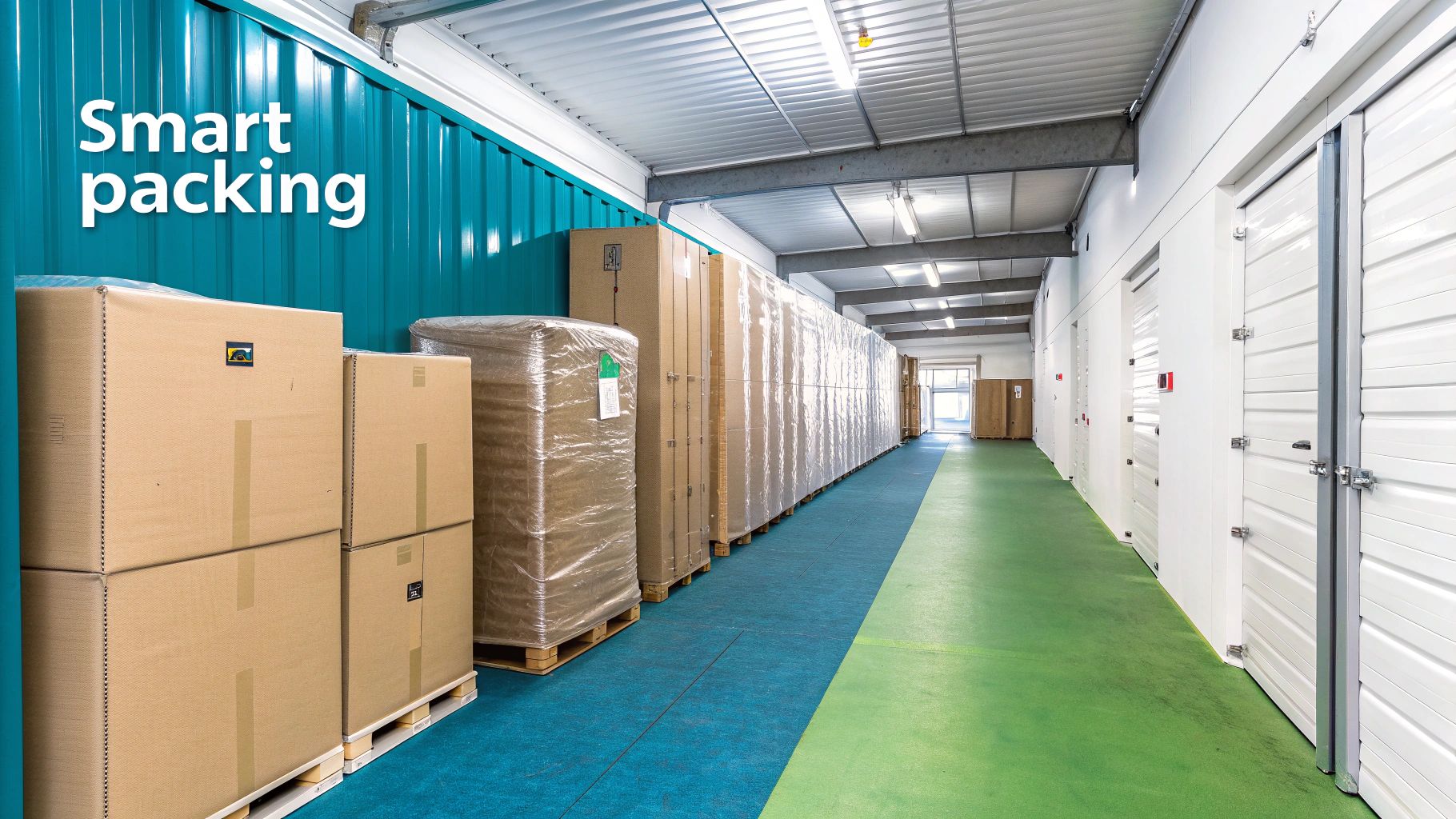
It all begins with the right materials. Using sturdy, uniform-sized boxes is a trick of the trade that makes a world of difference. They’re far easier to stack, creating stable towers that let you use your unit’s vertical space without worrying about boxes getting crushed.
Resist the temptation to grab flimsy boxes from the supermarket or use old bags. They simply can't handle the weight and offer next to no protection from dust or damp.
Strategic Packing For Protection And Access
With your boxes ready, the focus should shift to smart organisation and protection. This is about more than just wrapping up your fragile items; it’s about making the storage unit work for you. For a deep dive, our guide on how to pack for moving has some brilliant tips that are just as useful for storage prep.
Get into the habit of labelling every single box on at least two sides. A simple list of the contents and the room it belongs to is enough. Trust me, this small step turns a desperate hunt for a specific item into a quick, five-minute job.
Here are a few essential packing practices to keep in mind:
- Protect Fragile Items: Don't be shy with the bubble wrap, packing paper, or even old towels for things like glassware, dishes, and delicate electronics. Make sure nothing can shift around inside the box.
- Prepare Furniture: Dismantle larger pieces like tables and bed frames to maximise your space. Pop all the screws and small parts into a labelled bag and tape it securely to the main furniture piece so nothing gets lost.
- Ready Your Appliances: Give appliances like fridges or washing machines a thorough clean and dry to prevent mould and mildew from setting in. Secure any loose parts and tape the doors shut for transit.
A well-planned loading strategy is the final piece of the puzzle. Think of your storage unit like a small library; you want a central walkway so you can get to everything without having to unpack the whole lot just to find one box.
Place the items you're least likely to need right at the back. Heavier, bulkier things like furniture should go in first, forming a solid base along the walls. This kind of thoughtful organisation ensures that when you're looking for temporary storage near me, your experience is smooth from the moment you pack the first box to when you retrieve the last one.
Getting to Grips with Storage Costs and Contracts
Figuring out the cost of temporary storage doesn't need to be a headache. The key thing to remember is that the price you see advertised is usually just the starting point. A few different factors will nudge that final monthly figure up or down, so a little digging now can save you from any nasty surprises later.
The biggest influence on price? Location, location, location. UK industry data shows that the going rate for a storage unit typically lands somewhere between £27–£30 per square foot annually. But if you’re looking in London or the prime commuter towns, that can easily climb past £35 per square foot. You can get a deeper dive into these pricing trends from Cushman & Wakefield's detailed report. This regional difference means that a facility just a few miles down the road could be noticeably cheaper.
Always Read the Small Print
Once you've got a quote, the next job is to have a proper look at the rental agreement. This isn't just boring paperwork; it’s the rulebook for your rental, covering everything from when you pay to what happens if you don’t. Don’t just give it a quick scan—you’re looking for the details that will affect your wallet and your convenience.
Keep an eye out for these bits in particular:
- Introductory Offers: A deal like the ‘first month for £1’ is a fantastic way to start, but make sure you know what the standard monthly rate will be once the offer ends.
- Notice Period: Most places ask for seven to fourteen days’ notice before you move out. Knowing this stops you from paying for an extra week or two that you don’t actually need.
- Price Increases: It’s worth checking the policy on rent hikes. A good, reputable company will be upfront about how and when your rate might change down the line.
The Deal with Mandatory Insurance
Just about every storage facility in the UK will insist that you have insurance for your belongings. This is standard practice and protects both you and them if the worst should happen. Most facilities will offer their own insurance policies, which are certainly convenient, but they aren't always the cheapest option.
Before you tick the box for the facility’s own insurance, it’s well worth having a quick chat with your home insurance provider. Many home contents policies already cover your goods even when they’re stored elsewhere, which could save you a decent chunk of cash each month. You’ll just need to get proof of cover from them.
Got Questions About Temporary Storage? We Have Answers
Choosing a storage unit often brings up a few last-minute questions. Getting clear, honest answers is the best way to make sure you're confident in your decision and avoid any surprises later on. To help you wrap things up, here are the queries we hear most often from people new to self storage.
Do I Need Special Insurance for My Items?
Yes, just about every storage facility in the UK will require you to have insurance. It’s a standard practice that protects both you and the facility.
Most places will offer their own insurance policy, which is definitely the most convenient option. However, it's always worth checking if your current home contents insurance already covers items kept in an off-site storage unit. If it does, you can usually save a bit of money by simply showing them proof of your existing policy.
What Can't I Put in a Storage Unit?
For everyone's safety and hygiene, some items are strictly off-limits. This isn't just a company rule; these are legal requirements.
The no-go list typically includes:
- Hazardous Materials: Anything flammable, corrosive, or explosive. Think petrol, paint thinner, fireworks, or gas canisters.
- Perishables: Any food items that can spoil, rot, or attract pests are a definite no.
- Living Things: This one’s straightforward – no plants, animals, or any other form of life.
- Illegal Items: Anything that's illegal to own is, of course, banned from being stored.
Always ask for the facility’s specific list of prohibited items before you sign on the dotted line. It’s better to be certain.
How Much Notice Do I Need to Give to Move Out?
In the UK, the standard notice period is usually between seven and fourteen days, but this can vary from one facility to another.
You'll find this detail laid out clearly in your rental agreement. It's a small but crucial thing to check before signing, because failing to give the right amount of notice could leave you paying for another week or month of storage you don't actually need.
Ready to find your perfect storage solution in The Wirral? Shield Self Storage offers secure, flexible, and affordable units with 24/7 CCTV and daily access. Get your first month for just £1 and see how easy storage can be. Visit us at https://shieldselfstorage.co.uk to get a fast quote today.