
Choosing the right storage unit can feel a bit like a game of Tetris, but our storage unit size guide is here to make sure all the pieces fit perfectly. Nailing the correct dimensions from the start is crucial—it means you avoid paying for space you don't need while ensuring you don’t find yourself stuck with a sofa that won’t fit mid-move. This guide gives you a clear place to begin, helping you match your belongings to the ideal unit.
Why Your Storage Unit Size Matters
Picking the right storage unit size is probably the single most important decision you'll make in the whole self-storage process. Get it wrong, and you could end up paying for a half-empty space. Even worse, you might discover your prized armchair doesn't actually fit through the door on moving day. A well-chosen unit not only saves you money but also protects your belongings by giving you enough room for proper organisation and airflow.
This is especially true in the UK's booming self-storage market. The industry now offers over 64.3 million square feet of space, thanks to growing demand from homeowners and businesses alike. With so many options out there, having a clear strategy is essential.
Finding the Right Fit for Your Needs
To make a smart decision, you need to think beyond just the items you're storing today. Before you commit to a size, take a moment to consider these key factors:
- Your Purpose: Are you just decluttering the spare room, moving house, or storing business stock? Each scenario comes with different space and access requirements.
- Item Inventory: Jot down a quick list of your largest items—things like sofas, beds, and white goods. These will be the main players that dictate the minimum floor space you'll need.
- Accessibility: Do you need to get to your things regularly? If so, you'll want a slightly larger unit to create a walkway, so you aren't climbing over boxes every time you visit.
A good rule of thumb is that choosing a unit that’s slightly too big is always better than one that’s too small. It gives you a bit of wiggle room and saves you the headache of having to reorganise everything if you underestimated your needs.
For businesses looking to store stock or equipment, making every square foot count is paramount. There are plenty of clever ways to make the most of your area; check out our guide on essential tips for maximising business storage space. By taking a few moments to plan ahead, you can confidently pick a unit that works perfectly for you.
Here's a quick look at the most common unit sizes to get you started.
Quick Guide to Common Storage Unit Sizes
This table breaks down the standard UK storage unit sizes, giving you a better feel for what you can realistically fit in each one.
| Unit Type | Typical Size (sq ft) | Best For |
|---|---|---|
| Small Locker | 10 – 25 | A few boxes, seasonal items, or student belongings. Think of it as an oversized cupboard. |
| Medium Unit | 50 – 75 | Contents of a 1-bedroom flat, including a sofa, mattress, and some white goods. |
| Large Unit | 100 – 150 | Everything from a 2 or 3-bedroom house, such as large furniture, appliances, and garden tools. |
| Extra-Large Unit | 200+ | Ideal for business stock, equipment, or the entire contents of a large family home. |
Remember, these are just estimates. The best way to know for sure is to measure your biggest items and maybe even use an online size calculator to visualise the space.
Visualising Small Storage Units (10 to 35 sq ft)
When you just need that little bit of extra breathing room, small storage units are the perfect answer. Don't think of them as massive warehouses; instead, picture them as a secure extension of your home—like an oversized cupboard you can rely on, or a compact, weatherproof shed. Their smaller footprint makes them a genuinely affordable choice for decluttering, storing seasonal gear, or just getting you through a life transition without the chaos.
To really get a feel for what fits, it helps to use comparisons we all know. A 10 sq ft locker, for example, is roughly the size of a classic red telephone box. It’s absolutely ideal for those items you don’t need every day but can’t bear to part with, like a treasured vinyl collection or several archive boxes filled with important documents.
Step up to a 25 sq ft unit, and you’re looking at something comparable to a standard small garden shed. This size is a firm favourite with students needing to store their belongings over the summer, as it easily fits a single mattress, a desk, a chair, and plenty of boxes.
This image gives you a great visual breakdown of common sizes to help you gauge what you might need.
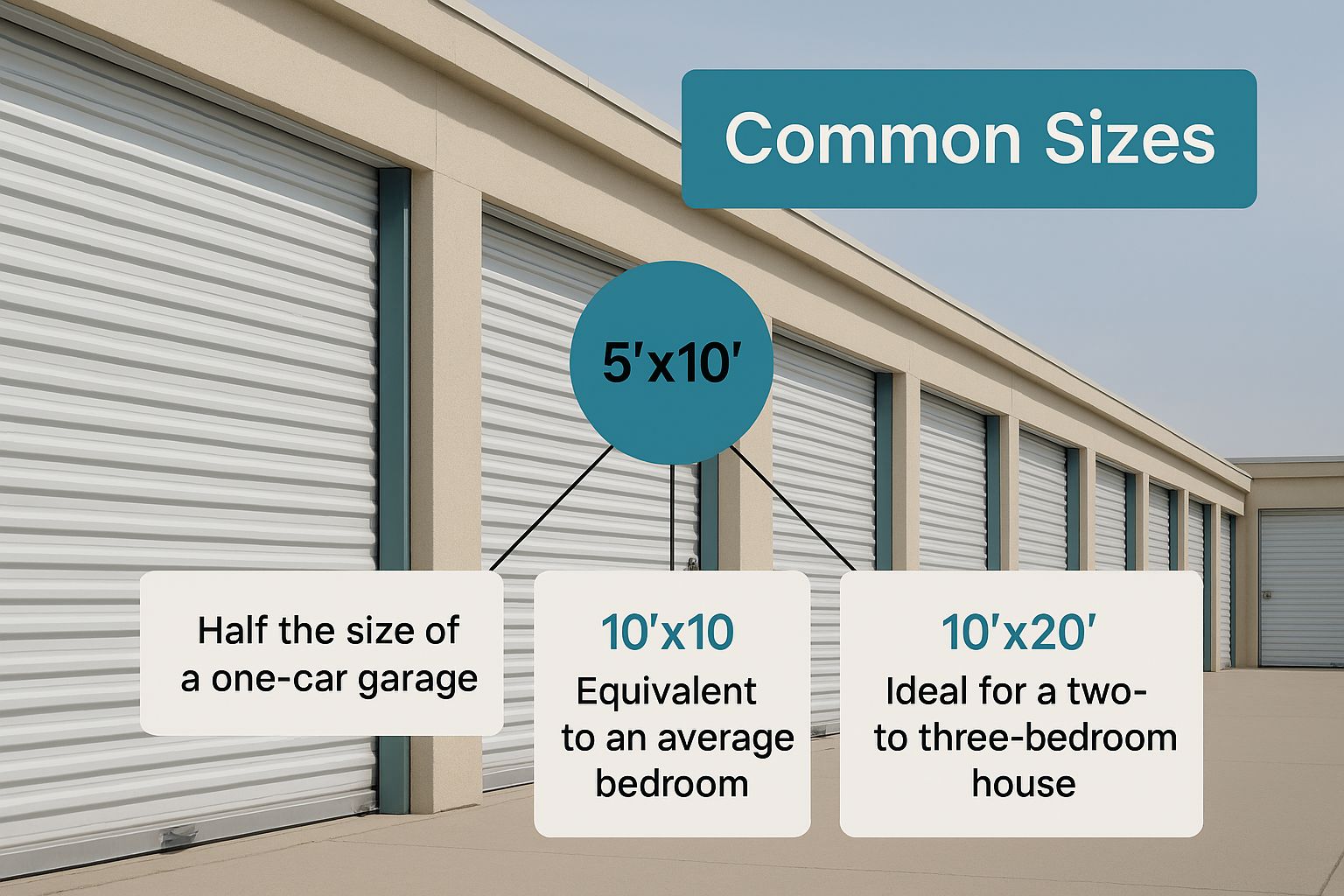
As you can see, even a small space can be incredibly effective when it’s organised properly.
What Fits in Small Storage Units?
The trick to getting the most out of a small storage unit comes down to smart packing and organisation. Take a 35 sq ft unit—it's similar in size to a large walk-in wardrobe, and you’d be surprised at just how much you can get in there. You could comfortably store the contents of a studio flat, minus the big white goods like a washing machine.
This table breaks down what you can typically expect to fit into our most popular small unit sizes.
| Unit Size (sq ft) | Approx. Dimensions | Comparable To | Example Items to Store |
|---|---|---|---|
| 10 | 3.3 ft x 3 ft | A classic telephone box | 15-20 medium boxes, suitcases, a small filing cabinet, Christmas decorations, sports gear. |
| 25 | 5 ft x 5 ft | A small garden shed | Double mattress and base, a small sofa, coffee table, and around 30-40 boxes. |
| 35 | 7 ft x 5 ft | A large walk-in wardrobe | Small dining set, chest of drawers, TV, multiple boxes, or excess business stock. |
As you can see, these smaller units are incredibly versatile and can handle a lot more than you might think.
These smaller units are incredibly versatile. They offer an efficient way to manage belongings without the commitment or cost of a larger space, making them a practical choice for a wide range of personal and business storage needs.
By taking a moment to plan what you need to store, you can make a confident decision. If you want to take a closer look at the options available, you can explore our various self-storage solutions to find the perfect fit. Small units really do prove that you don’t need a massive space to achieve a clutter-free life.
Right then, let's move on to the sizes that most people end up choosing: medium storage units.
Medium Storage Units: The Popular Choice (50 to 80 sq ft)
Once you get past the smaller options, you land in the sweet spot of self-storage. Medium-sized units, ranging from 50 to 80 square feet, are easily the most popular choice for a reason. They offer a serious amount of space without feeling like you’re renting an entire warehouse, making them perfect for those big life moments like moving house, tackling a home renovation, or finally clearing out a cluttered garage or loft.
A 50 sq ft unit is a great starting point. To get a feel for the size, think of a large walk-in wardrobe or a small box room. It’s typically just the right amount of space to pack away the contents of a one-bedroom flat. We’re talking about the essentials: a sofa, a double bed and mattress, a chest of drawers, a small dining set, and still plenty of room left over for boxes.
The Ideal Space for a Small House Move
Stepping up to a 75 sq ft unit gives you that extra bit of breathing room. The best way to picture it is to imagine about half of a standard single-car garage. That additional space makes it the go-to option for storing everything from an average two-bedroom house. It’ll comfortably swallow larger items like washing machines, fridges, and those bulky sofas that are a nightmare to move, making it a lifesaver during a house move or a major decluttering project.
People use these medium units for all sorts of things:
- Downsizing: Moving somewhere smaller? A medium unit lets you hang on to cherished furniture while you figure out what fits in your new place.
- Home Renovations: Keep your furniture and belongings safe from dust and damage while the builders are in.
- Getting Ready to Sell: Estate agents always say a spacious-looking home sells faster. A 75 sq ft unit can temporarily hold all your non-essential bits and bobs to make your house look its best for viewings.
- Business Use: These units are a brilliant solution for small businesses needing to store stock, archived documents, or tools without the headache of expensive commercial rent.
Getting a good handle on what you actually need to store is key. It means you can pick a medium unit that gives you plenty of room without paying for space you’ll never use. This perfect balance of size and cost is exactly why they’re the most frequently rented option in the UK.
Ultimately, deciding between a 50 sq ft or an 80 sq ft unit comes down to how bulky your furniture is and how many boxes you’ve got. Take a few minutes to list your biggest items—it’ll give you the clarity you need to make the right call and ensure everything goes smoothly.
Exploring Large Storage Units (100 to 200+ sq ft)
When you're dealing with a full house move or have serious business storage needs, it's time to think bigger. That’s where large units come in, starting from 100 sq ft and going all the way up to 200 sq ft or more. These are the solutions you need to avoid the stressful game of trying to squeeze large, valuable items into a space that’s just not going to work.
A 100 sq ft unit is a really popular choice in this category. The easiest way to picture it is to think of a standard single-car garage. That’s generally enough room to comfortably hold everything from an average three-bedroom family home. We’re talking bulky furniture like sofas, dining tables, and wardrobes, plus all the major appliances like fridges, freezers, and washing machines.
This picture gives you a great idea of the scale you can expect with these larger storage solutions.
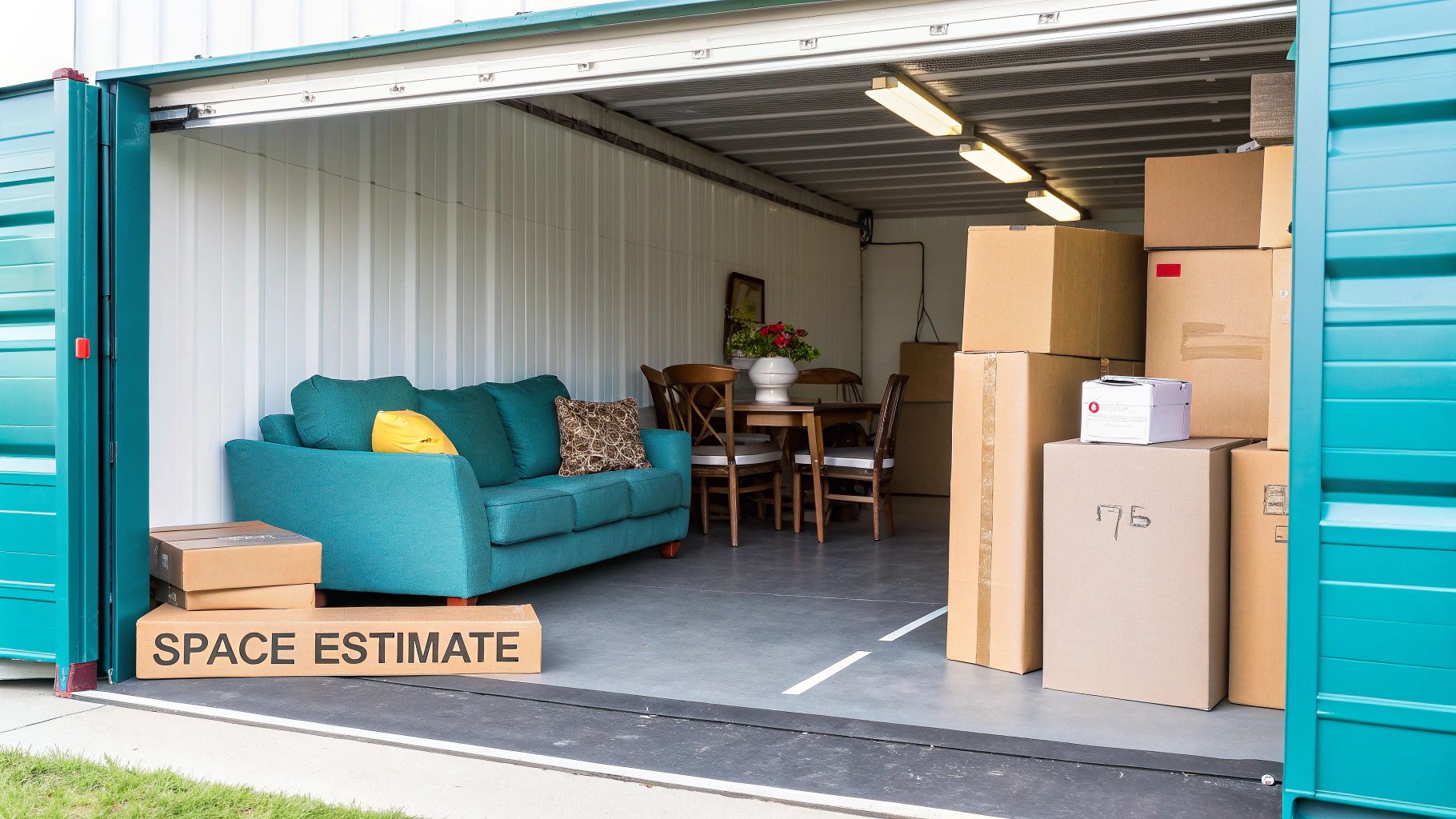
It’s the perfect amount of space for families caught between homes, giving them a secure place to keep everything safe while navigating the chaos of moving day.
Scaling Up for Major Moves and Business Needs
For those moments when even a single garage feels small, units of 150 sq ft or 200 sq ft offer cavernous amounts of space. These are ideal for storing the contents of a four or five-bedroom house, plus extras like garden furniture, large sports equipment, or even a small classic car. It makes them an absolute lifesaver during major home renovations or international moves.
These larger units are also a firm favourite with our commercial clients. Businesses find all sorts of clever ways to use them:
- Inventory Storage: A great way to hold excess stock or seasonal goods without committing to expensive commercial warehousing.
- Equipment and Tools: Tradespeople can securely store their valuable tools and machinery overnight or between jobs.
- Document Archiving: An ideal spot for keeping huge amounts of paperwork organised and safe in a climate-controlled space.
The demand for this kind of flexible space reflects a much wider trend. The UK self-storage market is now valued at around £1 billion and it’s growing fast. This is driven by things like urbanisation pushing us into smaller homes and the rise of remote working, which has encouraged a wave of decluttering. Businesses are also a huge part of this, using self-storage as a smart, cost-effective alternative to commercial property. You can dive deeper into these market dynamics in this detailed industry analysis.
A large unit gives you more than just space; it gives you peace of mind. Knowing that all your possessions—from family heirlooms to critical business assets—are securely stored in one accessible spot simplifies logistics and cuts down stress during times of change.
By getting a feel for what these larger units can hold, both people and businesses can make a much more informed decision, ensuring they pick a space that perfectly matches their needs.
How to Figure Out Exactly What Size Storage You Need
Trying to guess what size storage unit you need is a recipe for a headache. Get it wrong, and you'll either be playing a stressful game of real-life Tetris on moving day because the unit’s too small, or you'll be paying for empty space every month if it's too big. The key is to stop guessing and start calculating. It’s simpler than it sounds.
First things first, you need a proper inventory. Walk through every room in your house and make a list of everything you plan to put into storage. Be really specific, especially with the big stuff like sofas, wardrobes, and kitchen appliances, as these will be the main space-takers. Don’t just eyeball them, either—get the tape measure out. Knowing the exact length, width, and height of your bulkiest items is a game-changer.
Measure and Visualise Your Space
Once you have your list, start thinking vertically. Most UK storage units have a ceiling height of around eight feet, and one of the biggest mistakes people make is not using that height. This is where good, sturdy, stackable boxes become your best friend.
Think about how you’ll pack things in:
- Heavy items go first: Pop heavier boxes and solid furniture at the bottom to build a stable foundation.
- Lighter bits on top: Lighter boxes and more delicate items can be stacked high on top without risking any damage.
- Take furniture apart: Things like bed frames and dining tables can be disassembled. It drastically cuts down the space they take up and makes them much easier to shift.
And don't forget to leave room for those awkwardly shaped items, like a floor lamp or a couple of bicycles, that just won't stack neatly. They’ll need their own little spot.
By planning how you'll stack everything, you can often squeeze the contents of a much larger room into a smaller, cheaper unit. It’s not just about the floor space; it’s about the total volume.
Use a Storage Calculator for a Spot-On Estimate
While a pen-and-paper list is a great start, the quickest way to get rid of any doubt is to use a digital tool. An online calculator lets you punch in all your items and gives you an instant, reliable recommendation on the size you'll need. It turns a potentially tricky task into something you can sort in minutes.
For a precise recommendation tailored to your exact belongings, give the Shield Self Storage online storage calculator a try. It thinks of everything, from sofas to document boxes, giving you a clear estimate so you can book the right unit first time, every time.
What to Consider Besides the Unit Size
Choosing the perfect storage unit is about more than just getting the square footage right. While a good storage unit size guide is a great starting point, a few other critical factors will shape your experience. Thinking about these elements beforehand ensures you find a facility that truly meets all your needs, not just the spatial ones.
First up, weigh up the facility’s location. A storage centre close to home offers unbeatable convenience if you'll be visiting frequently, but one slightly further afield might come with more competitive pricing. It’s a classic trade-off between easy access and potential savings, and the right answer depends entirely on how often you'll need to pop in.
Security, Access and Climate Control
Once you’ve shortlisted a few locations, it’s time to dig into the specifics of the facility itself. These features can make a massive difference to your peace of mind and the preservation of your belongings.
Here are a few key features to look for:
- Robust Security: Check for the essentials, like 24/7 monitored CCTV, secure keypad entry, and good outdoor lighting. These are non-negotiable for keeping your items safe.
- Convenient Access Hours: Can you get to your unit when you actually need to? Facilities with long opening hours offer the flexibility to visit outside of a standard 9-to-5 schedule.
- Climate Control Options: For sensitive items like wooden furniture, electronics, artwork, or important documents, a climate-controlled unit is a must. It protects against damage from humidity and extreme temperature swings.
Choosing a storage facility is about more than just finding a space; it’s about finding a secure, accessible, and suitable environment for your valued possessions. Prioritising these factors will help you make a much more confident and effective decision.
Location also plays a big part in the self-storage industry across the UK. Demand varies by region, with the South East seeing the most expansion. Interestingly, awareness of self-storage isn’t universal—around 37% of people are unfamiliar with the concept, particularly outside of major cities.
Thinking through these points is a key part of the process. For a deeper dive, check out our guide on how to choose the best storage facility when moving house.
Still Have a Few Questions?
Choosing the right storage unit can feel like a big decision, and it’s natural to have a few questions floating around. To help you get everything sorted and feel confident in your choice, we’ve put together answers to some of the things we get asked the most.
Think of this as your final checklist to clear up any last-minute uncertainties.
What’s the Most Popular Storage Unit Size in the UK?
Hands down, the most popular choice for our UK customers is a medium-sized unit, usually somewhere between 50 and 80 square feet. They’re just so versatile. This size is typically the sweet spot for storing the entire contents of a one or two-bedroom flat.
It’s no surprise they’re the go-to option for people moving house, doing a bit of renovating, or finally tackling that big decluttering project.
Can I Change My Storage Unit Size Later On?
Absolutely. We know that sometimes your plans change, or it's hard to judge the exact space you'll need. Most good storage facilities in the UK are flexible. If you find your unit is a bit too snug or you've got more empty space than you thought, you can usually switch to a different size.
It's always a good idea to check the facility's specific transfer policy before you sign on the dotted line, just so you know how it works. But generally, as long as another unit is available, it’s a straightforward process.
How Much Extra Room Should I Leave for a Walkway?
This is a great question and something people often forget. If you plan on popping in and out of your unit regularly, leaving a walkway is a game-changer. There’s nothing worse than having to unpack half your unit just to get to a box at the back.
A good rule of thumb is to add an extra 10-15% to your space estimate. That little bit of extra room is perfect for creating a central aisle, making it much easier to get to your belongings whenever you need them.
Are All Storage Units the Same Height?
That's a common assumption, but no, ceiling heights can vary. They might differ between facilities or even between different units on the same site. Most modern places in the UK aim for a standard height of around 8 feet (roughly 2.4 metres), which gives you plenty of room to stack boxes.
It's always best to ask the site manager for the exact height of the unit you're interested in. That vertical space makes a huge difference to how much you can actually store.
Ready to find the perfect space for your belongings? The team at Shield Self Storage makes it simple. Use our handy online tools to get a fast quote and book the ideal unit for your needs today. Find out more at https://shieldselfstorage.co.uk.