For a lot of businesses, the old way of leasing a huge commercial warehouse just doesn't make sense anymore. It's expensive, the contracts are long and inflexible, and it can seriously hold back a growing company that needs to stay nimble. This is where modern self storage steps in, offering a far more practical and financially sound solution.
Savvy businesses are starting to see self storage as more than just a place for overflow. It’s a genuine strategic tool for growth. Think of it less as a dusty lock-up and more as a dynamic extension of your own premises. It can be a hub for your inventory, a secure spot for valuable equipment, or an off-site archive for crucial documents. This simple shift in thinking is changing the game for how companies manage their physical assets.
How Businesses Use Self Storage to Gain a Competitive Edge
Instead of getting locked into rigid, long-term leases, businesses are discovering the freedom and agility that self storage provides. It's an agile, cost-effective alternative that transforms how you operate, helping you cut overheads without the scary financial commitment.
A Flexible Asset for Modern Operations
Picture an e-commerce brand that gets a massive surge in stock every Christmas. Renting a big warehouse all year for a three-month peak is just throwing money away. With a self storage unit, they can scale their space up for the festive season and then downsize again in January, only ever paying for what they actually need. It’s that simple.
Or take a tradesperson, like an electrician or plumber. They can use a local unit to keep their expensive tools and materials safe and organised. It gets the clutter out of their van and home, giving them a central, secure base to operate from. No more worrying about high-value gear being left in a vulnerable vehicle overnight.
Ultimately, the benefits boil down to three key things: cost, flexibility, and growth.
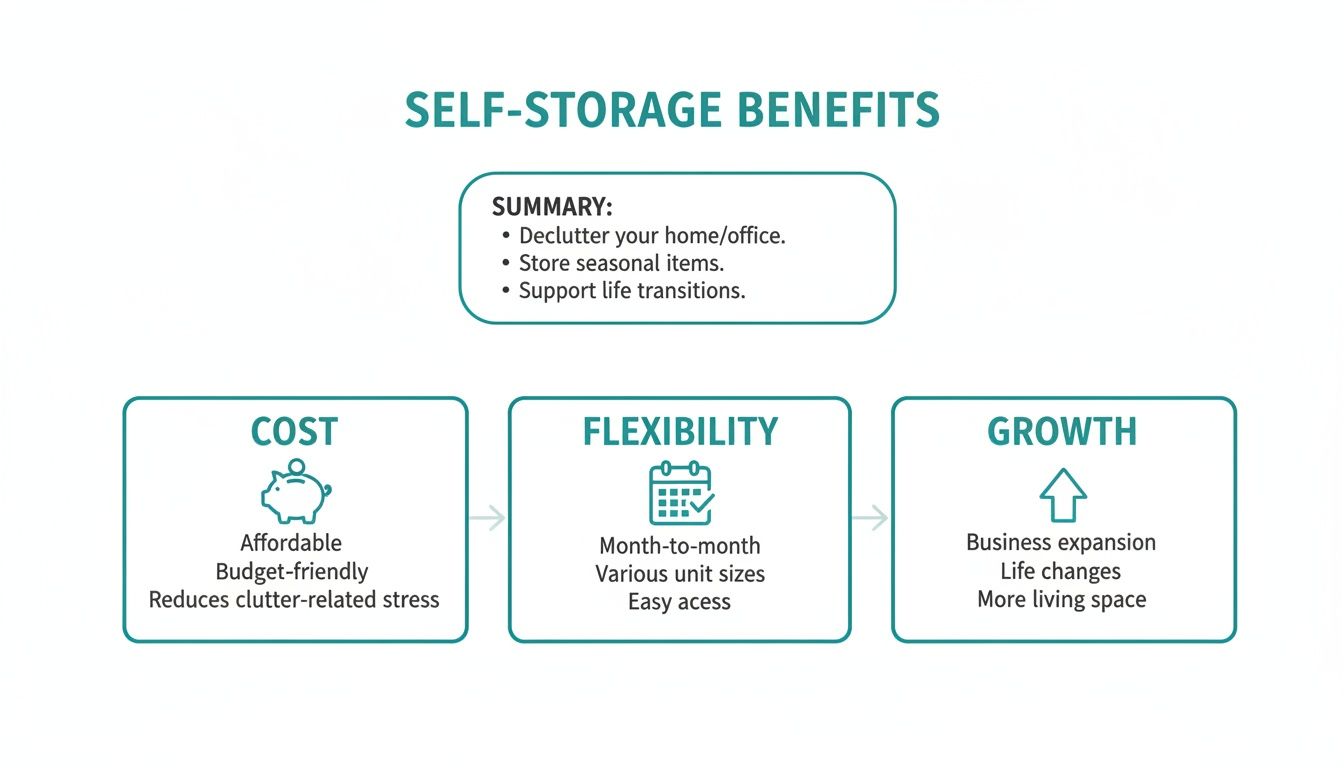
As you can see, it’s all about giving companies an adaptable solution that lets them scale without being weighed down by long-term liabilities.
The Financial and Practical Advantages
The numbers really speak for themselves. Small businesses across the UK are increasingly turning to self storage as a smart alternative to traditional warehousing. In fact, 27% of all renters use their units for business purposes, with over 680,000 enterprises already slashing their costs by 40-60%. You can get a deeper dive into these trends in the UK Self Storage Industry Report 2025.
When you move away from a restrictive commercial lease, you're not just cutting costs. You're freeing up vital capital that can be pumped back into marketing, product development, or hiring new talent. It’s a strategic financial move.
Before we get into a direct comparison, it's clear self storage offers a leaner, more responsive way to do business. Here are a few of the standout perks:
- Slashed Overheads: You can completely sidestep the big costs tied to traditional leases, like business rates, utility bills, and surprise maintenance fees.
- Top-Notch Security: Good facilities offer 24/7 CCTV, secure keypad access, and on-site staff. That’s often far better security than a small business could afford on its own.
- Better Organisation: Having a dedicated storage space keeps your main workspace clear and productive. It neatly separates your day-to-day operations from your stock or equipment.
Business Storage vs Traditional Warehousing A Quick Comparison
When you stack them side-by-side, the advantages of using self storage over a traditional warehouse lease become crystal clear for most small and medium-sized businesses.
| Feature | Self Storage (e.g., Shield) | Traditional Warehouse |
|---|---|---|
| Contract Length | Flexible, often month-to-month | Rigid, typically long-term leases (3-10 years) |
| Upfront Costs | Low (usually first month's rent + a small deposit) | High (large security deposit, legal fees, fit-out costs) |
| Ongoing Overheads | All-inclusive rent (no business rates, utilities, or maintenance) | Multiple bills (rent, rates, utilities, insurance, repairs) |
| Space Flexibility | Easily scale unit size up or down as needs change | Fixed space, often requiring a new lease to change |
| Security | Comprehensive (24/7 CCTV, gated access, alarms) included | Tenant's responsibility and additional cost |
| Accessibility | Often 24/7 access available, convenient locations | May have restricted hours, often in industrial estates |
| Maintenance | Handled by the facility operator | Tenant's responsibility |
The takeaway here is pretty straightforward. For businesses that need to adapt quickly without sinking capital into property, self storage is a powerful tool. It’s about building a more resilient and agile business, ready to grab opportunities without being held back by fixed assets and long-term financial burdens.
Defining Your Business Storage Needs
Before you even start looking at self storage units, it’s worth taking a moment to figure out exactly what you need. So many businesses make the mistake of rushing this part, and it almost always ends up costing them. They either pay for space they never use or, even worse, run out of room right when business is picking up. The goal is to find a unit that feels like a natural extension of your operations, not a costly afterthought.
Start with the most basic question: what are you actually storing? An online retailer with 500 boxes of seasonal stock has completely different needs to a local builder who needs to grab bulky tools and materials every morning. The items themselves dictate the kind of space, access, and security you’ll require.
Here in the UK, businesses are a huge part of the self storage world, making up a massive 27% of all renters. Most of these aren’t big corporations; a significant 61% are small enterprises with just one to three employees, like e-commerce sellers or local tradespeople. You can explore UK storage statistics for 2025 to get a better sense of the trend. This just goes to show how critical it is for small operations to get their storage sorted right from day one.
Calculating Your Required Space
Working out how much space you need can feel like a guessing game, but it doesn't have to be.
First, make a list of everything you plan to put in storage. Don’t just think about the big stuff; include boxes of paperwork, inventory, and furniture. And remember to think vertically. A unit with a high ceiling is gold for stacking, especially if you bring in some sturdy shelving to make the most of the cubic footage.
For a really practical sense of scale, try marking out the dimensions of a potential unit (say, 5ft x 10ft) on your floor with masking tape. It’s a simple trick, but seeing the space laid out in front of you can be a real eye-opener. You’ll be surprised how much you can fit into what seems like a small area.
As a rough guide, we find the contents of a typical transit van will fit comfortably into a 50-75 square foot unit. If you’re caught between two sizes, it’s almost always better to go slightly bigger. You’ll thank yourself later when you’re not playing Tetris with your stock.
If you’re still scratching your head, an online calculator is your best bet. To take the guesswork out of it, check out our guide on how much storage you might need. It's a straightforward way to translate your inventory into the right unit size.
Assessing Access and Security Needs
Size is only half the story. You also need to think about how you'll be using the unit from day to day. Let your daily workflow guide your decision.
-
How often will you be there? Are you a tradesperson needing daily access to tools, or an online seller who only pops in once a month to rotate stock? If you need frequent access, a facility with long opening hours and a convenient location is essential to avoid messing up your schedule.
-
What are you moving? If you’re storing heavy or awkward items, look for ground-floor units, wide corridors, and on-site trolleys. These simple features make loading and unloading so much easier.
-
How valuable are your items? For high-value inventory or sensitive documents, security is non-negotiable. Look for facilities with individual unit alarms, 24/7 CCTV, and secure electronic gate access. This isn't just about stopping theft; it's about protecting the assets your business depends on.
By thinking through these three things—space, access, and security—you’re not just renting a box. You’re finding a strategic partner that genuinely helps your business run smoother. Get this definition right, and every pound you spend on storage will pay for itself.
Choosing the Right Storage Facility for Your Business
Okay, you've figured out what you need to store. Now comes the crucial part: finding a facility that acts less like a landlord and more like a genuine business partner. Let's be honest, not all storage providers are created equal, and the right one can make your day-to-day operations so much smoother.
It’s tempting to just go for the cheapest unit you can find, but that's often a false economy. A cheap unit is no bargain if it’s miles away, adding an hour to your daily trips, or if it lacks the security to protect thousands of pounds worth of inventory. The best decision is a balanced one, where you weigh the cost against the things that really matter: location, security, and flexibility.

Location and Accessibility
The old saying "location, location, location" is just as true for self storage as it is for property. A facility that's close to your home, office, or main delivery routes can save you a surprising amount of time and fuel. Think about your daily workflow—will you need to pop in first thing in the morning or last thing at night?
Convenient opening hours are an absolute must. You need a facility with extended access that works with your business day, not just the standard 9-to-5. Some providers even offer 24-hour access, which is a game-changer for businesses that don't stick to a typical schedule. Remember, every minute you spend travelling or waiting for gates to open is a minute you're not spending on your business.
Security and Peace of Mind
For any business, security isn't just a feature; it's everything. Your stored items—whether it's stock, tools, or important documents—are valuable assets that demand serious protection. When you're checking out a facility, a quick drive-by just won't cut it. You need to look closely at their security setup.
Choosing a facility with comprehensive security isn’t just about preventing theft; it's about giving you the confidence to store high-value assets off-site without worry. It’s an investment in your peace of mind and business continuity.
Look for multiple layers of security. Here’s what should be on your checklist:
- Perimeter Fencing: Is the whole site fully enclosed with secure, well-maintained fencing?
- Electronic Gate Access: Do they use a keypad or fob system to control and log who comes and goes?
- 24/7 CCTV Monitoring: Are cameras strategically placed to cover all corridors, entrances, and driveways?
- Individually Alarmed Units: Do individual units have their own alarms for that extra layer of protection?
- Good Lighting: Is the entire facility well-lit, especially for those late-night or early-morning visits?
Contract Flexibility and Professionalism
Finally, have a good look at the rental agreement. The best self storage for businesses offers genuine flexibility. Steer clear of providers trying to lock you into long, rigid contracts. A rolling monthly contract is ideal because it lets you scale your space up or down as your needs change, without getting hit with penalties.
It’s also worth taking the time to speak with the on-site staff. Are they professional and helpful? A clean, well-maintained facility is usually a great sign of a professionally run operation. Before you commit, it’s also a good idea to understand all the potential unit sizes they offer to make sure they can support your future growth. You can get a better idea by checking out a guide to the various sizes of storage units to make an informed choice right from the start.
Turning Your Storage Unit into an Operations Hub
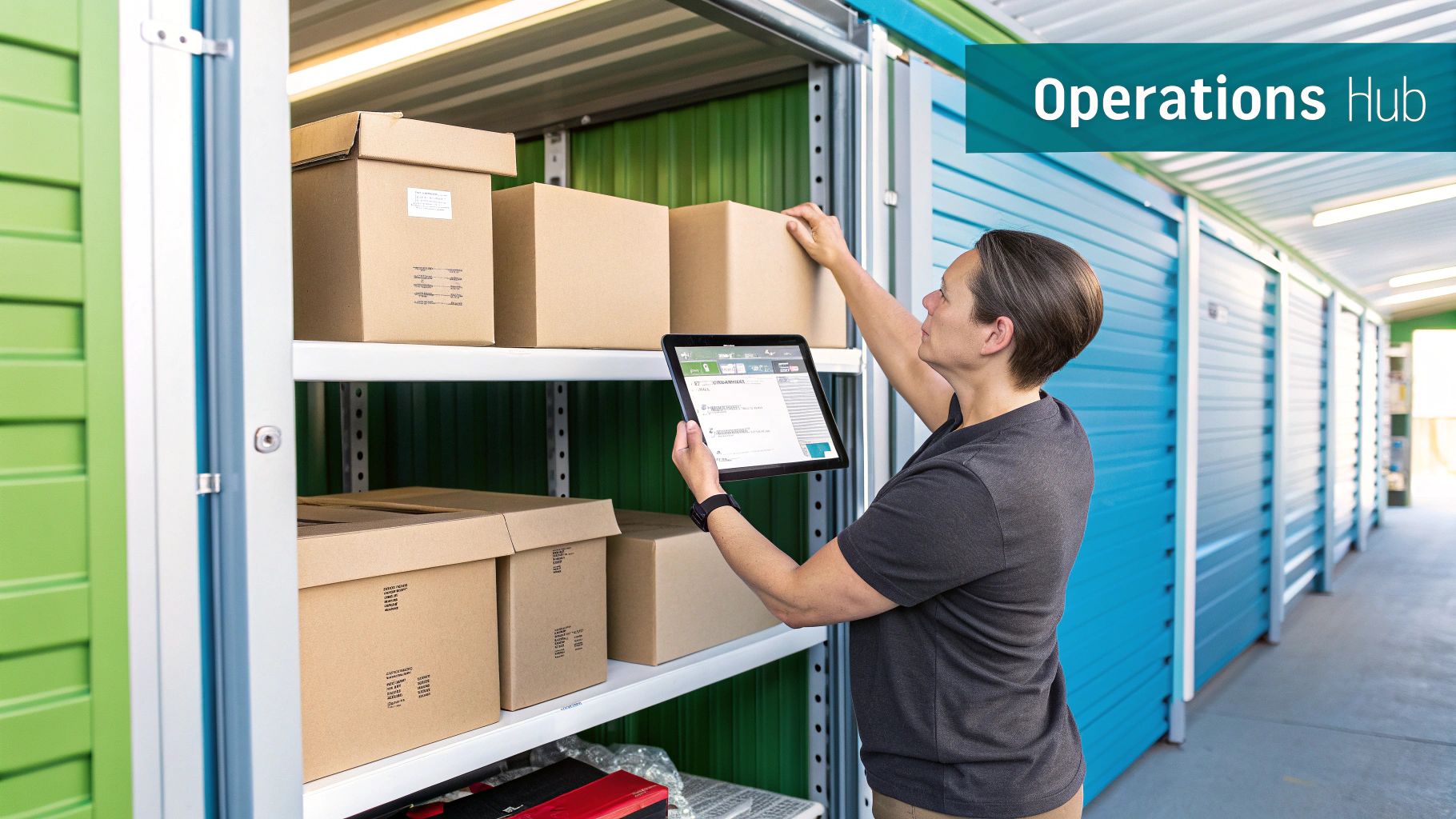
A storage unit can be so much more than a simple cupboard for overflow stock. With a bit of planning, it can become a highly efficient mini-warehouse or a satellite office—a genuine hub that actively supports your daily workflow. The trick is to stop thinking of it as static storage and start treating it as a dynamic operational base.
This shift in mindset isn't just a niche idea anymore. In fact, a remarkable 24% of UK self-storage users are now running parts of their businesses directly from their units. It’s a trend that highlights just how adaptable these spaces have become.
Smart Organisation for Maximum Efficiency
Let's get practical. The first order of business is smart organisation. If you’re an e-commerce seller or a tradesperson, you know that finding what you need quickly is non-negotiable. Wasting time hunting for a specific item is a real momentum killer.
Your best friend here will be sturdy, freestanding shelving. This lets you use the full vertical height of your unit—a simple trick that can easily double or even triple your usable space. Whatever you do, avoid stacking boxes directly on the floor. It just makes accessing the items at the bottom a nightmare.
Next up, get your labelling system sorted. Whether you use a thick marker or a label maker, make sure every box clearly states its contents and location. A simple inventory sheet or a basic app can map out where everything is, saving you a massive headache during busy periods.
Think of your unit like a library. Every item should have a designated "shelf address" so it can be located and retrieved in seconds. This organised approach is what separates a cluttered lock-up from a high-functioning operations hub.
Creating Zones for a Smoother Workflow
With your shelving in place, it's time to think about creating distinct zones for different types of stock or equipment. This strategic layout ensures your most-used items are always within easy reach, making your entire process feel much smoother.
Here are a few zoning ideas I've seen work brilliantly:
- High-Frequency Zone: This is prime real estate. Place your best-selling products or daily-use tools right at the front for grab-and-go access.
- Archiving Zone: Bulkier, less-used items like archived documents or seasonal kit can be tucked away towards the back.
- Processing Area: Leave a small, clear space to serve as a packing station or an area for sorting deliveries before they hit the shelves.
As you transform your unit into an active hub, don't forget security. Make sure it's properly secured against unauthorised access, which might mean looking into specialised commercial locksmith services. For more ideas, have a look at our guide on what to store offsite to streamline daily operations.
Weaving Storage into Your Daily Workflow
A self storage unit only pulls its weight when it slots neatly into your daily business operations. The aim is to make it a natural extension of your workspace, not another logistical problem to solve. This means thinking carefully about how you and your team will actually use the space day in, day out.
First up, you've got to nail the logistics. Think about your most common routes for deliveries and customer collections. A well-planned route can save a surprising amount of time and fuel over the course of a year. Try mapping out your drop-offs and pick-ups to cut down on backtracking, making every trip as productive as possible.
Managing Team Access and Inventory
Once your routes are sorted, the next question is who needs to get in and out of the unit. Giving your team secure, controlled access is essential for a smooth workflow. Many modern facilities offer individual keypad codes, which are great because they let you track who's coming and going, adding a handy layer of security.
But access is only half the battle; your team needs to know what’s actually in there. This is where a bit of simple tech makes all the difference. A shared spreadsheet or a basic inventory management app lets everyone see what's in stock without having to drive over to the unit. This kind of remote visibility is a lifesaver for answering customer questions or planning jobs on the fly.
The trick is to treat your storage unit like a mini distribution hub. A clear system for who can get in and a live inventory list transforms a simple storage box into an active, valuable part of your business toolkit.
To make moving goods around inside your unit and back and forth to your van even easier, think about getting some proper equipment. Using things like roll cage trolleys for efficient movement can make a huge difference. This kind of gear cuts down on manual lifting, speeds up loading times, and reduces the risk of someone getting hurt or stock getting damaged.
Getting Insurance Sorted for Business Storage
Finally, let's talk about insurance—something far too many businesses forget about until it’s too late. It’s absolutely crucial to understand that the insurance offered by the storage facility and your own business policy are two completely different things. You can't substitute one for the other.
Here’s a simple way to think about it so you know your assets are properly covered:
- Facility Insurance: This almost always covers the building itself—the walls, the roof, the structure of your unit—against major events like a fire or flood. What it doesn't cover is what's inside your unit. Your valuable stock, tools, or documents are not included.
- Your Business Insurance: You need to have a policy that specifically covers "goods in storage." This is what will protect your items against theft, accidental damage, and other potential disasters.
Always, always have a chat with your insurance broker to confirm that your current policy extends to items stored off-site. If it doesn’t, you'll need to sort out specialist cover. Don't just assume you're protected. Checking your insurance is a five-minute job that could save you thousands of pounds and a world of stress later on, making sure your business can handle whatever comes its way.
Your Business Storage Questions, Answered
To wrap things up, let's tackle a few of the most common questions businesses ask when considering self storage. Getting clear answers upfront can help you make the right call and get the most out of your unit from day one.
What Can I Actually Store in a Business Unit?
This is a great question, and an important one. The good news is that most facilities are pretty flexible, letting you store a huge range of business items.
Think of it as the perfect spot for:
- Surplus Stock: Seasonal goods, excess products, or your e-commerce inventory.
- Tools and Equipment: A secure lock-up for valuable gear, especially for tradespeople.
- Archived Documents: A safe, dry home for important files and paperwork you need to keep.
- Office Furniture: Ideal during an office move, refurbishment, or when downsizing.
- Marketing Materials: Exhibition stands, pop-up banners, and all your event supplies.
That said, there are some universal no-gos for safety and legal reasons. You generally cannot store hazardous materials like paint or chemicals, flammable liquids, perishable items like food, or anything illegal. It's always a good idea to have a quick chat with the facility manager to confirm your specific items are good to go.
How Flexible Are the Rental Contracts?
This is where self storage for businesses really shines compared to traditional commercial leases. Most reputable facilities, including ours, run on a simple rolling monthly agreement.
What that means for you is no long-term, rigid commitments. You can rent a unit for as little as a month, giving you the freedom to scale your space up or down as your business needs change. This agility is a game-changer for seasonal businesses or companies in a growth spurt, as you only ever pay for the space you need, right when you need it.
The ability to adapt your storage space on a monthly basis is a powerful tool for managing cash flow. It eliminates the financial dead weight associated with a half-empty warehouse on a multi-year lease.
What Security Features Really Matter?
When it comes to business use, security is non-negotiable. The assets you're storing are vital to your operations, so you need complete confidence that they're protected around the clock.
As you check out a facility, look for a multi-layered security system that goes beyond a simple padlock. The essentials include:
- 24/7 Monitored CCTV: Comprehensive camera coverage of all key areas, including entrances, exits, and corridors.
- Secure Electronic Gate Access: A system requiring a unique PIN or fob to get on-site, ensuring only authorised people have access.
- Individually Alarmed Units: An extra layer of protection that sounds an alarm if your specific unit is tampered with.
- Good Lighting and Perimeter Fencing: A well-lit, fully enclosed site is a powerful deterrent.
These features all work together to create a secure environment, giving you the peace of mind that your valuable business assets are safe.
Ready to create a flexible, secure, and cost-effective operations hub for your company? At Shield Self Storage, we provide top-tier self storage for businesses in The Wirral with rolling monthly contracts and robust security. Find the perfect unit for your needs and get your first month for just £1. Discover your ideal business storage solution with us today!